 Camel trek
3-day camel trek to Erg Lmhazil
The shortest true camel trek: palm grove, Jebel Bani, El Mhazil dunes and Lake Iriki in three days on foot.
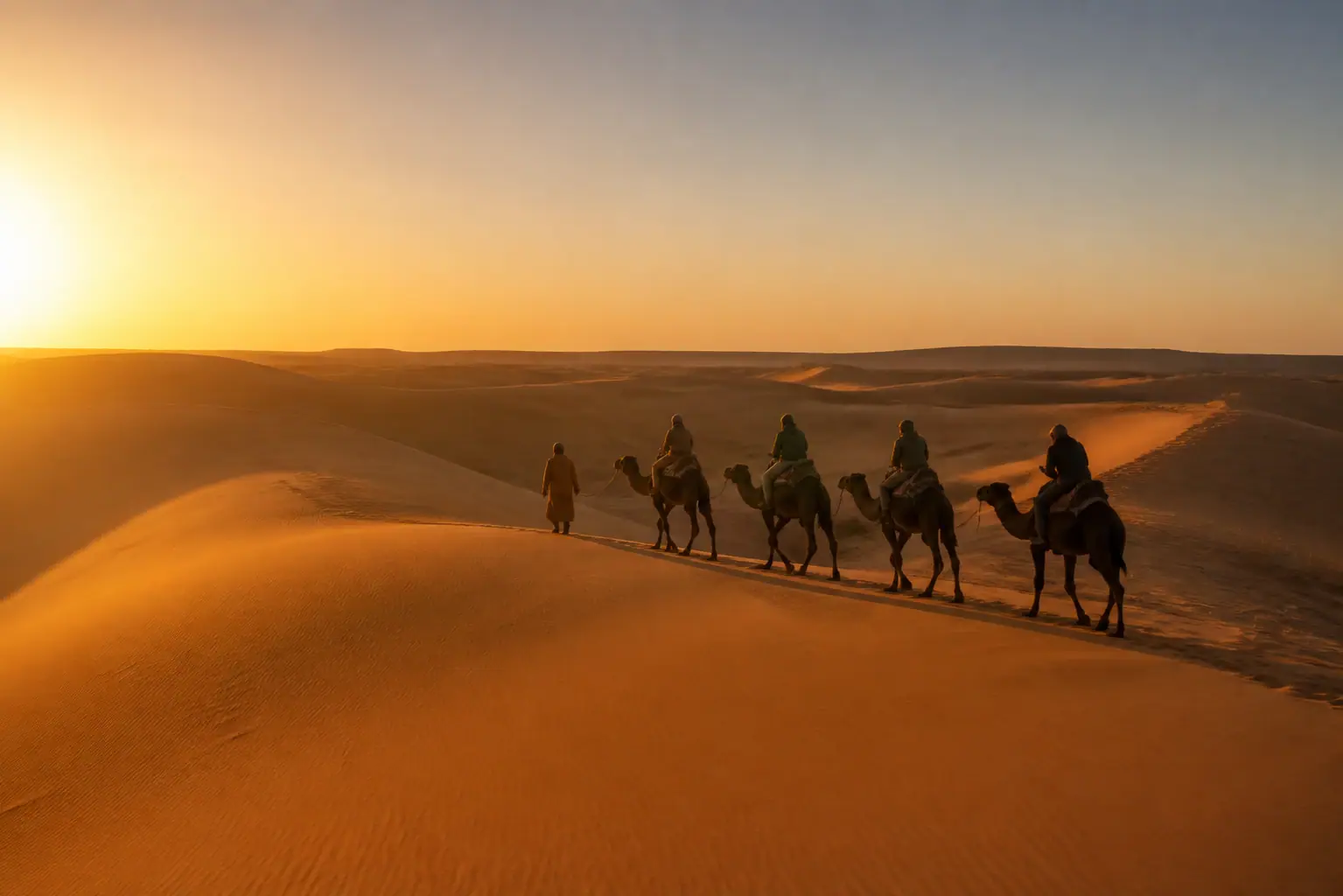
Sahara camel trekking in Morocco is more than dunes: stony plains, dry riverbeds, oases and a vast dry lake. Here is what walking this desert from Foum Zguid really involves.
In short
From Foum Zguid, Sahara camel treks cross the desert between the Jebel Bani and Erg Chigaga: gravel plain, the dunes of Erg El Mhazil and Erg El Ghoule, El Grisim oasis and the dry bed of Lake Iriki. Treks last 3 to 7 days, with 2 to 6 hours of walking a day while camels carry the camp. Season: October to April. Price: from €230 per person.
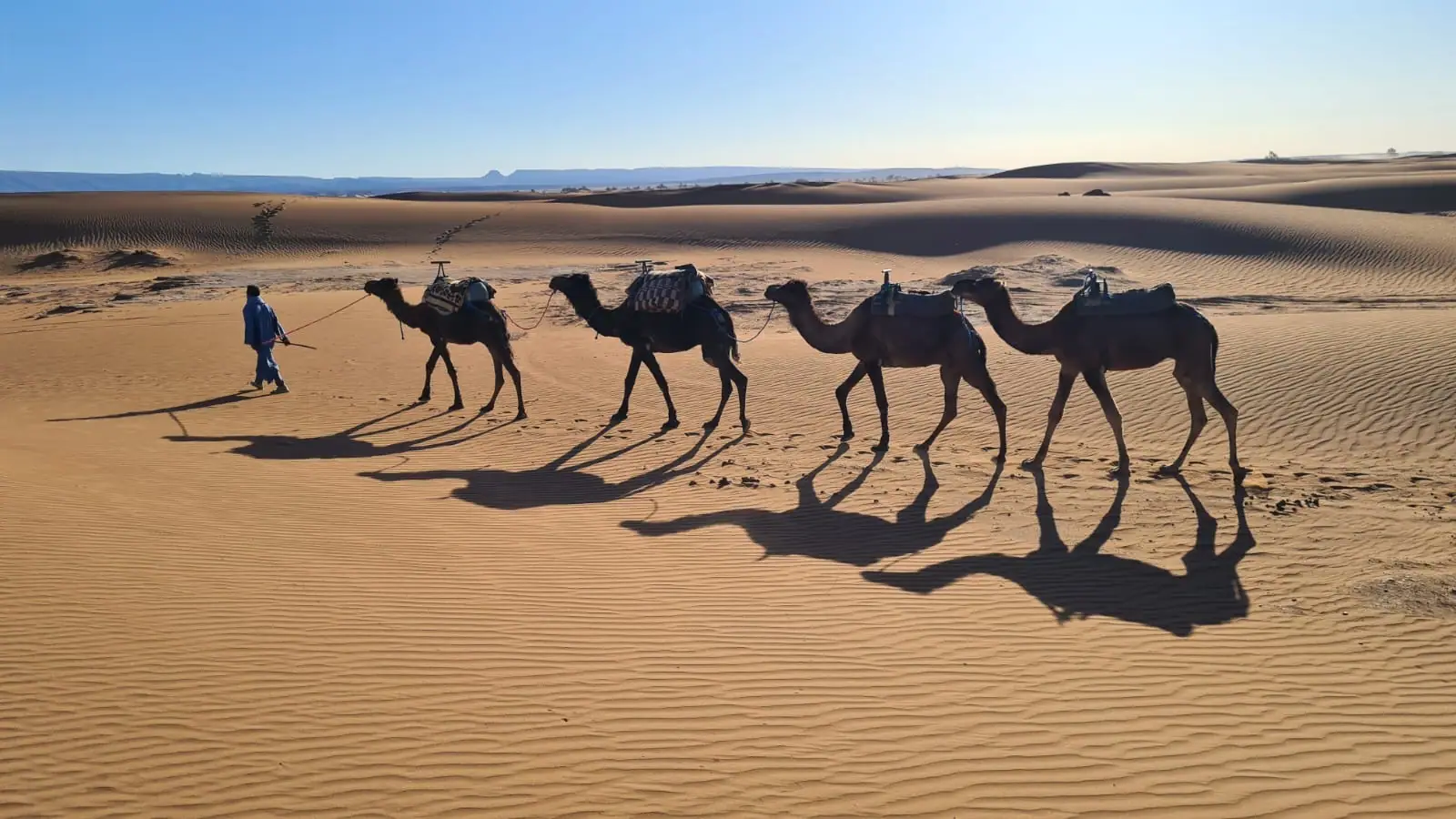
Picture a few people on foot and a string of camels behind them, roped together, each carrying sacks, water cans and rolled tents. That is Sahara camel trekking in Morocco as we do it: you walk, the animals carry, and a cameleer keeps the line moving at a pace anyone can hold for hours.
Many people expect sand from start to finish. In reality the Moroccan Sahara south of the Atlas is a patchwork. You cross gravel plains where the ground rings under your boots, follow dry riverbeds lined with acacia, climb into dune fields, and come down to palm groves. The variety is what makes a multi-day trek interesting, and it also explains why treks are measured in hours rather than kilometres: twenty minutes in soft sand can feel like an hour on the flat.
Riding is possible too. On most treks the camels mainly carry luggage, and riding part of a stage can be requested; the 3-day Erg El Mhazil trek (from €230) gives every walker a camel and a cameleer.
Foum Zguid is an oasis town on the N12, at the foot of the long rocky wall of the Jebel Bani. South of that ridge the land opens into one of the emptier corners of the Moroccan Sahara:
Each of these has its own guide on this site: Lake Iriki and the national park, the El Mhazil dunes, Erg Chigaga and Foum Zguid and its desert.
| Terrain | Where you meet it | What it means for walking |
|---|---|---|
| Gravel and stone plain | Leaving Foum Zguid, along the Jebel Bani | Firm and quick; watch your ankles on loose stones |
| Soft dunes | Erg El Mhazil, Erg Elhaj Ahmed, Erg El Ghoule, Erg Chigaga | Slow and tiring uphill; easier along the firmer ridges and in the cool of the morning |
| Tamarisk and acacia country | Between the ergs, the tamarisk dunes on the 7-day trek | Shade for lunch, uneven ground between the bushes |
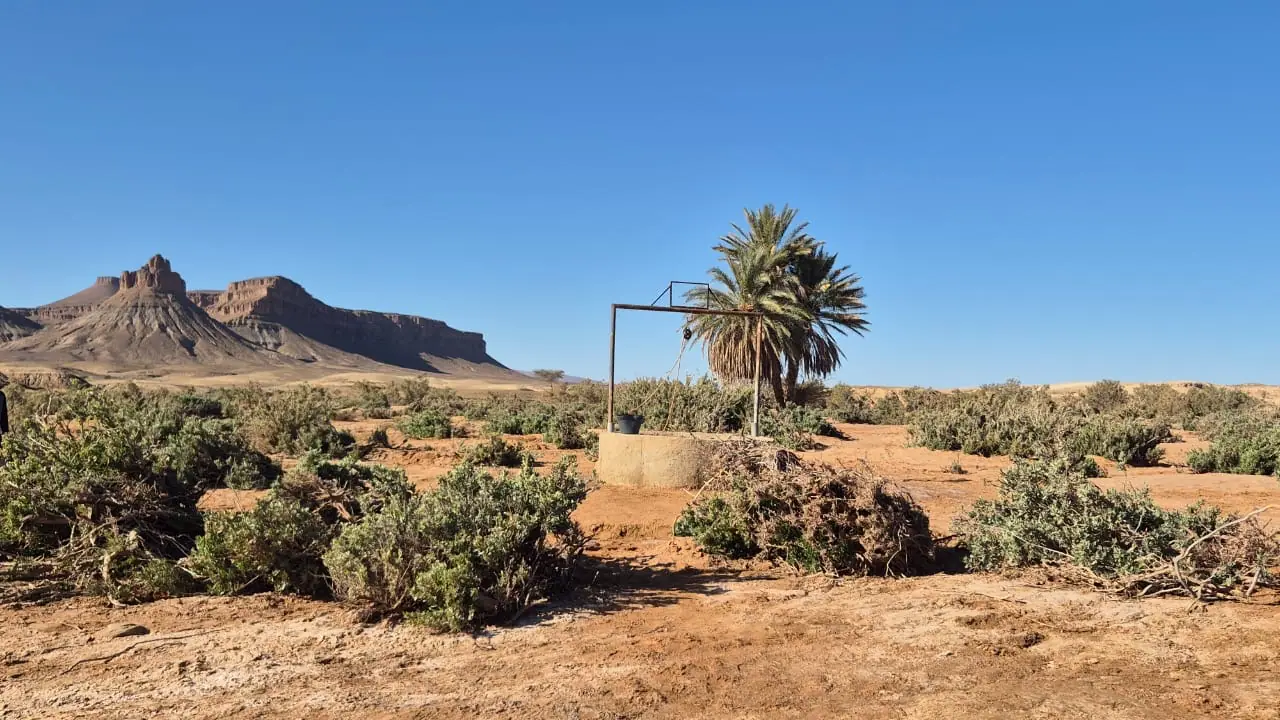
| Oasis and palm grove | El Grisim, the nomads’ oasis on the Iriki trek | Short, shaded walking, a pause in the rhythm |
| Dry lake bed | Lake Iriki | Flat, hard and bright; no shade at all, so sun protection matters |
Good walking shoes with some ankle support help on the stony sections; in the dunes many trekkers prefer lighter footwear and gaiters to keep sand out.
Our six routes all start from the same desert, but they cover it differently:
All six are compared side by side on our camel trek page.
The trekking season runs from October to April. Outside it the desert is simply too hot for walking: summer days are often above 40 °C.
| Period | Days | Nights at camp | Notes |
|---|---|---|---|
| October–November | Warm | Mild to cool | Start of the season, long walking days are comfortable |
| December–February | Pleasant for walking | Cold, can be close to freezing | Pack a warm sleeping bag and layers |
| March–April | Warming up | Cool | Sandstorms can blow up on some days |
| May–September | Very hot, often above 40 °C | Warm | Outside the trekking season; on city circuits in July–August the dune night may become an oasis night |
Month-by-month advice and a packing list are in our camel trekking tips.
The day follows the sun. You leave early, walk the first stretch while the sand is still cool, and stop around midday under whatever shade the route offers. On the 3-day Erg El Mhazil trek the programme sets about four hours of walking on day one, five to six on day two with a long midday rest, and an early start on day three to reach Lake Iriki before the heat. The Chigaga stages on the 6-day route are shorter, about three hours, then two to three.
Camp is set by the caravan team. The loads come off, the camels kneel, tea is brewed, and the evening belongs to the fire. To know what a night out there feels like, read our page on the camel trek and night in the desert.
Prices for every trek are gathered on the camel trekking price page. Booking is by WhatsApp on +212 649 598 615: tell Abdul when you can come and how many you are, and he confirms programme and price before anything is fixed.
Camel trekThe shortest true camel trek: palm grove, Jebel Bani, El Mhazil dunes and Lake Iriki in three days on foot.
 Camel trek
Dunes, two camps and a respectful visit to a nomad school, with camels carrying the kit. From €250.
 Camel trek
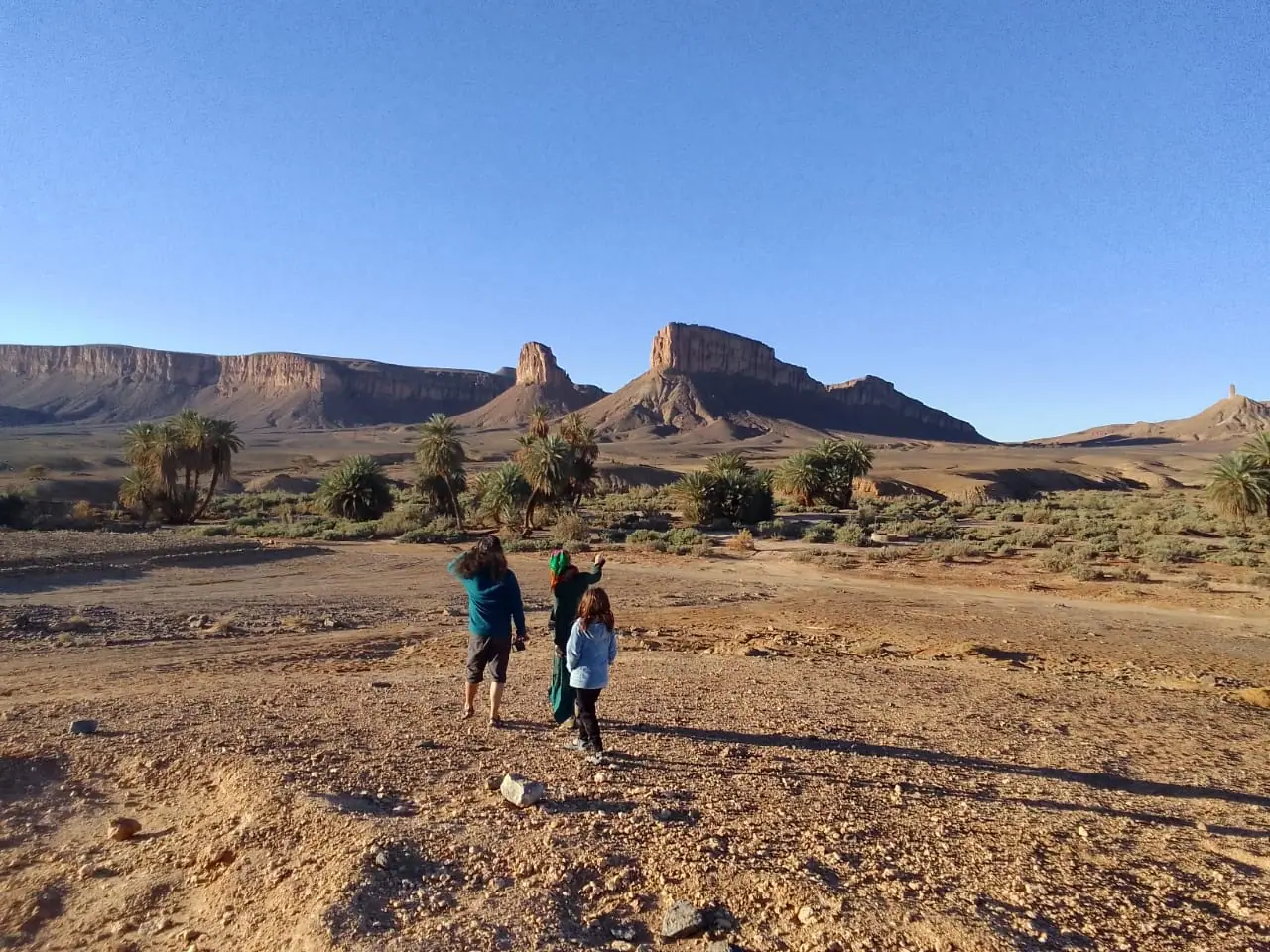
Dunes, a nomad oasis and an earth-built guesthouse in Iriki National Park, four days from Foum Zguid.
Camel trekThree dune camps and a night under oasis palms, with transfers from Marrakech or Agadir included. From €640.
Yes. South of the Jebel Bani you are in the Moroccan part of the Sahara: Erg Chigaga, Morocco’s largest dune field, Lake Iriki and Erg El Mhazil all lie in this desert. It is not all sand dunes, though. Much of it is gravel plain, dry riverbeds and acacia steppe, with oases between, which is exactly what a trek crosses.
It depends on the trek and the day. On the Erg El Mhazil trek, count roughly 4 hours on day one and 5 to 6, breaks included, on day two; about 4 hours on the nomad school trek, and 2 to 3 hours on the Erg Chigaga stages of the 6-day route.
Yes, if you can walk for a few hours with breaks. Nothing is technical; the effort comes from soft sand and sun. The 3-day treks make a good first step, and you can ask to ride when you tire. Train with a few long walks before you come if you rarely hike.
In season, from October to April, days are warm to pleasant and the main issue is sun, not heat. Nights are a different matter: in winter they can drop close to freezing. Summer days often pass 40 °C, so treks are kept to the October–April season.
You might. Iriki National Park protects species such as the dorcas gazelle, and the 6- and 7-day treks include time to look at desert animals and plants. Most of what you notice will be tracks in the sand, birds and plants like acacia and tamarisk. No sighting can be promised.
For a trek like these, yes. There are no marked trails, water and food must be carried, and the camels need handlers who know them. Our treks include a guide and a camel caravan, with full board during the walking days, so all you need to bring is your own personal kit.
A ride is an hour or so on a camel at the dunes, usually at sunset, as part of a 4×4 trip. A trek lasts several days: you walk most of the way, the caravan carries the camp, and you sleep somewhere new each night. Both are possible here; see our pages on desert nights and one-day options.
Write on WhatsApp with your dates, the number of travellers and the trip that tempts you. Nothing is booked until you agree.